How Many Days After Ovulation Can You Take a Pregnancy Test?
Use DPO timing to choose a sensible test day, understand an early negative, and know when a repeat test or clinical advice is more useful.
Quick answer: A home pregnancy test may detect hCG around 10 to 14 days after ovulation, but the most dependable time is usually the expected period day or later. Testing at 7 or 8 DPO is often too early. Because ovulation dates are estimates, repeat a negative result instead of treating it as proof that pregnancy is impossible.
This guide explains how many days after ovulation you can take a pregnancy test without treating DPO as a diagnosis. It covers hCG timing, practical testing, result limits, and symptoms that need medical attention.
On this page
How Many Days After Ovulation Can You Take a Pregnancy Test?
The earliest useful window is often about 10 to 12 days after ovulation, but testing is more dependable on the expected period day or later. Tests detect human chorionic gonadotropin (hCG) in urine, which rises only after implantation; the clock does not start at sex or at an app's fertile-day prediction.
At 7 or 8 DPO, a negative result usually reflects timing. Some sensitive tests detect hCG at 10 DPO, while 12 to 14 DPO is more informative for many cycles. If the period is late and the result is negative, repeat after about 48 hours or follow local clinical advice.
- 7–8 DPO: Usually too early; a negative result is not conclusive.
- 10 DPO: Some sensitive tests may detect hCG, but timing varies.
- 12–14 DPO: A more informative window, especially near the expected period.
- After a missed period: Usually more useful; repeat or seek advice if uncertainty persists.
If you are counting from intercourse instead of ovulation, compare the dates with our guide to when you can test after sex because the two starting points are not interchangeable.
What Can a Pregnancy Test Show at 7 to 14 DPO?
DPO means days past ovulation, but it is useful only when ovulation was estimated reasonably well. Apps, cervical mucus, ovulation kits, basal temperature, and ultrasound provide different levels of confidence. If ovulation was two days later than expected, a label of 12 DPO may really be closer to 10 DPO.
Implantation timing varies and hCG needs time to rise. Two people testing on the same DPO can therefore receive different results. Use the table as a planning guide, not a promise.
| Estimated timing | What it may mean | Practical next step |
|---|---|---|
| 7–8 DPO | Often before a reliable urine signal; a negative cannot rule out pregnancy. | Wait, knowing a repeat will likely be needed. |
| 9–10 DPO | A sensitive test may detect hCG, but many remain negative. | Use first-morning urine and plan a repeat at 12–14 DPO. |
| 11–12 DPO | Results become more informative, though late implantation can delay detection. | Follow instructions and repeat in 48 hours if negative and the period is absent. |
| 13–14 DPO | Often near the expected period, so a correct result is more useful. | Confirm a positive with a clinician and repeat an unexpected negative. |
| After the expected period | A negative is less likely to be only early timing, but ovulation may be misdated. | Retest or contact a healthcare professional if the period remains absent. |
How Should You Test After Ovulation?
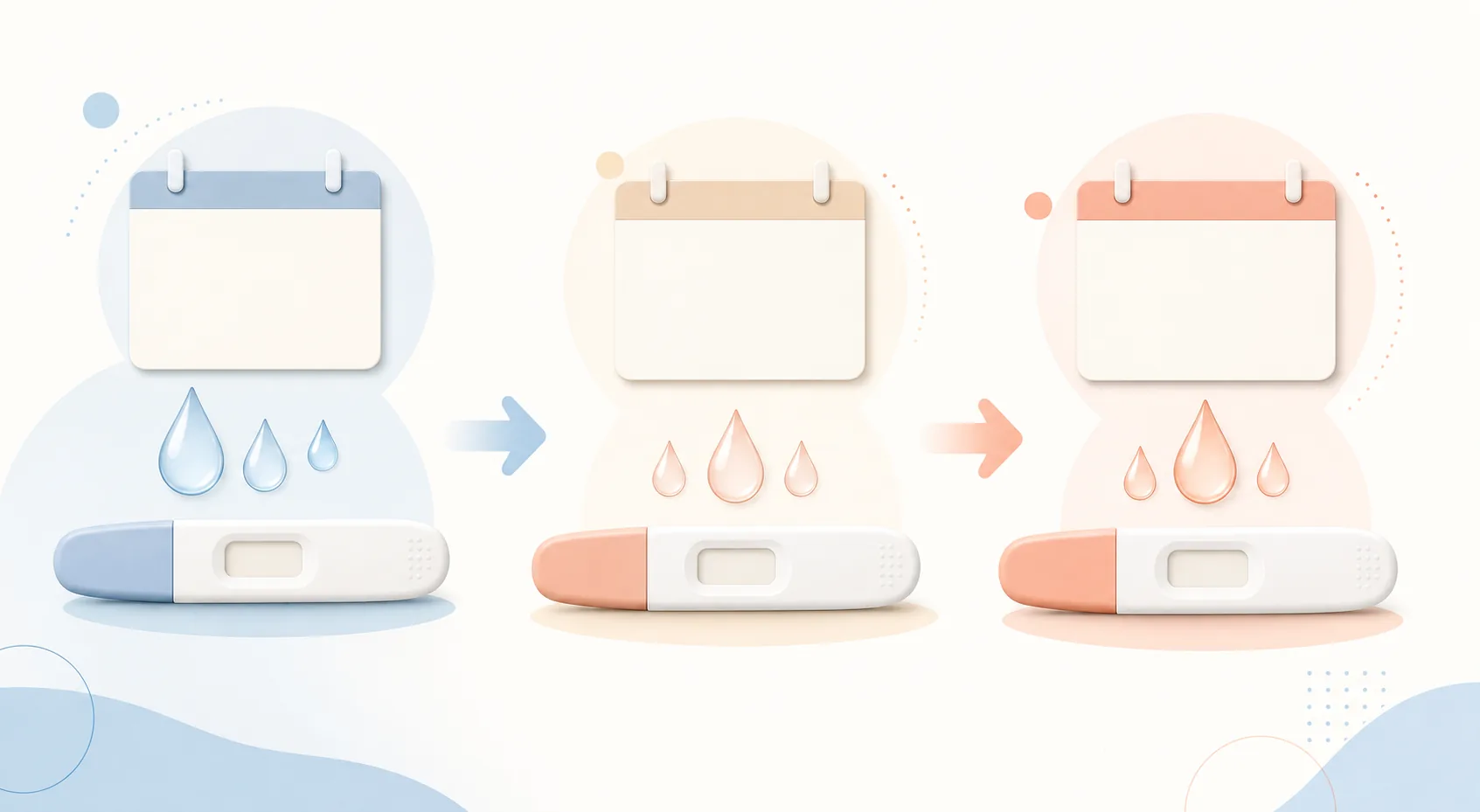
Choose an unexpired test and read its instructions before collecting urine. Tests differ in sample method and reading window. Large amounts of liquid immediately before testing can dilute urine and make an early result harder to detect.
First-morning urine may be more concentrated when testing early, although NHS guidance says urine can be tested at any time. Correct timing, an intact control line, and reading only within the stated window matter most.
- 1. Confirm the date you are counting from. Note how ovulation was estimated and allow for a one- or two-day error.
- 2. Check the test before use. Check expiry, packaging, sample method, and reading time.
- 3. Avoid over-diluting urine. Follow the instructions and avoid unusually large drinks before an early test.
- 4. Read only in the valid window. A later line may be an evaporation mark or drying artifact.
- 5. Make a repeat plan. If negative before the expected period, repeat in about 48 hours or when late.
| Choice | Why it matters |
|---|---|
| Test at 10 DPO | It may give an early signal, but a negative often needs repeating. |
| Test at 12–14 DPO | Results are usually easier to interpret near the expected period. |
| Test after a missed period | This lowers the chance of testing before enough hCG is present. |
| Use a blood test | A clinician can choose a quantitative test when dates or symptoms need more detail. |
How Do You Read an Early Pregnancy Test Result?
A positive line within the valid window deserves confirmation, even when faint. A negative before the expected period may simply be early. Do not compare line darkness between brands or dried tests; shade is not a reliable hCG measurement.
An invalid result is different from a negative. If the control line is missing, the window is blank, dye has run, or a digital test shows an error, repeat with a new test. A clinician can review timing, symptoms, and whether a blood test is useful.
| Result | What it tells you | Next step |
|---|---|---|
| Positive in the valid window | That sample contained hCG above the test threshold. | Contact a clinician for confirmation and care guidance. |
| Negative before the expected period | hCG was not detected above the threshold at that time. | Repeat at 12–14 DPO or after the period is late. |
| Negative after a missed period | Pregnancy is less likely, but late ovulation or test error can matter. | Repeat or ask a clinician if the period remains absent. |
| Invalid or unclear | The test did not produce a reliable result. | Use a new test and follow its instructions. |
For more detail on timing, instructions, and false negatives, read the pregnancy test accuracy guide .
What Are the Limits of DPO Timing and Early Symptoms?
Breast tenderness, fatigue, bloating, cramps, spotting, and nausea can occur in early pregnancy, before a period, after ovulation, with stress, or for other reasons. Symptoms cannot tell you the exact DPO or confirm implantation. A urine or blood test detects hCG.
Ovulation kits detect a hormone surge, not the exact release moment; basal temperature usually confirms a pattern afterward. Treat calendar dates as a range. Seek care for severe pain, heavy bleeding, fainting, shoulder pain, or feeling seriously unwell instead of waiting to retest.
- Apps estimate dates: They assume patterns and can miss early or late ovulation.
- Symptoms overlap: PMS and early pregnancy can feel similar, so symptoms do not replace testing.
- Medication questions matter: Ask a clinician about fertility treatment or medicines that affect interpretation.
- Emergency symptoms override timing: Urgent pain, fainting, shoulder pain, or heavy bleeding needs prompt assessment.
- Privacy is separate from accuracy: A browser tool can organize dates but cannot measure hormones or diagnose.
For a symptom-focused next-step review, see the early pregnancy symptoms guide , while remembering that symptoms alone cannot confirm pregnancy.
Can a Photo Checker Confirm a Test Taken After Ovulation?
A clear photo can show whether a control line and possible second line are visible in the valid window. It cannot determine DPO, measure hCG, identify an evaporation mark, or diagnose ectopic pregnancy. Keep the original photo and read time for a clinician if needed.
The site’s AI pregnancy test checker offers an informational second look, not a diagnosis. If the image is blurry, overexposed, cropped, or late, repeat the physical test or ask a professional.
If you already have a clear line-test photo, try the AI pregnancy test checker to review visible lines and image quality.
For broader reliability guidance, read our pregnancy test accuracy guide .
FAQ About Pregnancy Tests After Ovulation
Trusted Medical References
These patient-facing sources explain general test timing and hCG detection. They do not replace advice from a healthcare professional who knows your history.
The bottom line
How many days after ovulation can you take a pregnancy test? Some tests may detect hCG around 10 to 12 DPO, but the expected period day or later is usually more informative. A negative result before that point may only mean that testing was early. Count DPO as an estimate, follow the instructions, repeat an unexpected negative, and seek medical care for urgent symptoms.