Early Pregnancy Symptoms: What to Notice and When to Test
A symptom can be a clue, but it cannot confirm pregnancy. Use timing, a properly read home test, and medical advice when needed.
Short answer: Early pregnancy symptoms may include a missed period, breast tenderness, fatigue, nausea, more frequent urination, mild cramping, or light spotting. They can begin around the time a period is due, but some people notice nothing at first. Because the same sensations can come from PMS, stress, illness, medication, or normal cycle changes, symptoms alone are not a pregnancy test.
The most useful question is not simply “Which symptoms do I have?” It is “What is the timing, what else could explain it, and what should I do next?” This guide separates common early signs from clues that are too nonspecific, explains what can happen before a missed period, and gives a practical testing and safety plan.
Contents
What early pregnancy symptoms can—and cannot—tell you
Early pregnancy symptoms are changes someone may notice after conception, implantation, or the hormonal changes that follow. The timing is not identical for everyone. Some people feel changes before the expected period, while others have no noticeable symptoms until several weeks into pregnancy. A symptom list therefore works best as a prompt to check timing and testing—not as a score that proves pregnancy.
A missed period is often more useful than a single sensation, especially when cycles are usually predictable, but it still has many possible causes. Breast tenderness, tiredness, bloating, cramps, headaches, mood changes, and nausea can all occur in non-pregnant cycles. The table below is a way to organize possibilities, not a diagnostic chart.
| Possible clue | Why it may happen | What it cannot prove |
|---|---|---|
| Missed or late period | Ovulation or hormone timing may have changed; pregnancy is one possibility. | It cannot confirm pregnancy when cycles are irregular or dates are uncertain. |
| Breast tenderness | Hormonal changes can affect breast tissue before a period or in early pregnancy. | It is common with PMS, contraception, and other cycle changes. |
| Fatigue | Progesterone, poor sleep, stress, illness, and many other factors can contribute. | Tiredness alone is not specific to pregnancy. |
| Nausea or food aversion | Hormonal and digestive changes may contribute, but timing varies widely. | It can also come from infection, migraine, medication, or food-related causes. |
| Light spotting or cramps | Several cycle and cervical changes can cause mild bleeding or discomfort. | Appearance alone cannot distinguish normal spotting from a problem. |
The safest interpretation
Treat symptoms as a reason to choose an appropriate testing day, not as confirmation. If you are unsure, use a date-based plan and repeat an early negative rather than repeatedly checking symptoms.
Common early pregnancy symptoms
People often search for the early signs of pregnancy when a period is approaching or feels different. The most frequently discussed symptoms include a missed period, breast changes, fatigue, nausea, increased urination, bloating, mild cramping, and changes in smell or appetite. These symptoms can be real and still be caused by something other than pregnancy, so the pattern and timing matter more than any single item.
Symptoms also vary by pregnancy and by person. Some people have strong nausea; others never vomit. Some notice breast tenderness first; others notice only a late period. The absence of symptoms does not rule out pregnancy, and a cluster of symptoms does not confirm it.
- A late or missed period. This is more meaningful when your cycles are usually predictable, but stress, illness, travel, weight change, breastfeeding, contraception, and irregular ovulation can also delay bleeding.
- Breast tenderness or fullness. Hormonal shifts can make breasts feel sore, heavy, tingly, or more sensitive. PMS can produce the same change, so it is not a stand-alone sign.
- Unusual tiredness. Fatigue may appear early, but sleep loss, anemia, stress, thyroid problems, infection, and medication can look similar.
- Nausea, food aversion, or smell sensitivity. These are commonly associated with pregnancy, but they may begin later, never occur, or have non-pregnancy causes such as reflux, migraine, or illness.
- More frequent urination or bloating. Hormonal changes, fluid intake, constipation, urinary irritation, and normal premenstrual changes can all affect these sensations.
- Mild cramps or light spotting. Mild symptoms can occur around a period or in early pregnancy, but heavy bleeding, severe pain, or worsening symptoms need medical assessment.
When do early pregnancy symptoms start?
There is no single day when early pregnancy symptoms start. The body must first ovulate, fertilization must be possible, and pregnancy-related hormonal changes must develop. A person may notice ordinary post-ovulation changes before a pregnancy test can detect hCG, which is one reason symptom timing can feel confusing.
A useful timeline is approximate rather than predictive. Counting from sex can be unreliable because ovulation may happen later than expected. Counting from a known ovulation date or the expected period can give a clearer testing plan, but even those dates are estimates for many people.
- After ovulation or possible conception. There may be no pregnancy-specific symptoms yet. Bloating, breast changes, or mild cramps can simply reflect the normal luteal phase.
- Before the expected period. Some people notice fatigue, breast tenderness, smell sensitivity, or light spotting, but these changes overlap heavily with PMS and cannot confirm pregnancy.
- Around the expected period. A missed period becomes a more useful clue when cycles are regular. A properly timed home test is generally more informative than symptom-watching.
- After an early negative. If bleeding does not begin and pregnancy is still possible, repeat the test after about 48 hours or follow the test brand’s instructions and ask a clinician when appropriate.
Early pregnancy symptoms before a missed period
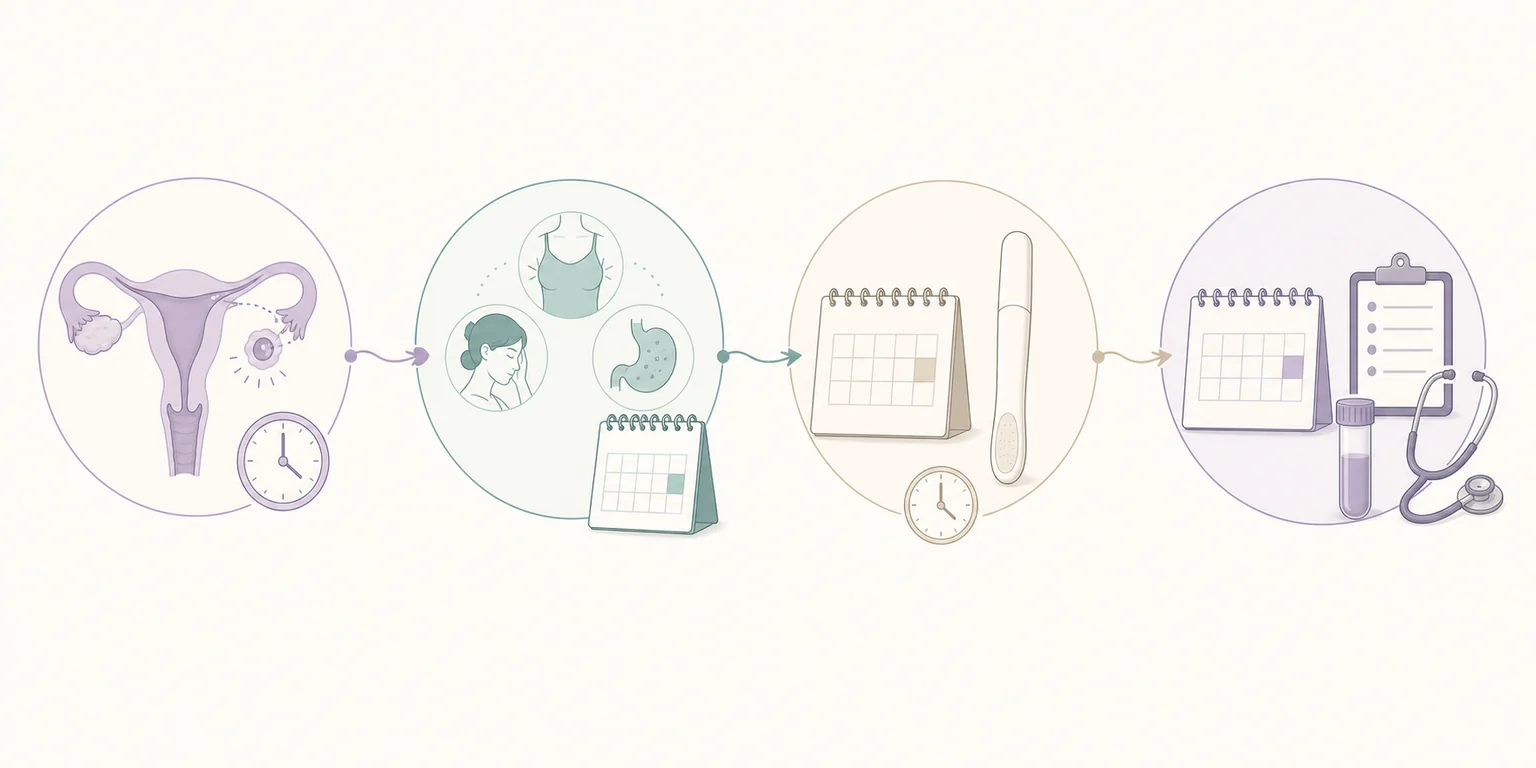
Symptoms before a missed period can feel urgent because testing may still be too early to give a clear answer. Mild cramps, breast tenderness, fatigue, appetite changes, or light spotting may occur, but the same changes are common before a period. A symptom that appears a few days before the expected period should therefore be described as possible, not proof.
If you test before the period is due, follow the instructions for that specific test and understand that a negative may simply mean the timing is early. The practical plan is to note the date, avoid reading a test after its stated window, and repeat the test when the period is late or after the interval recommended by the manufacturer.
- Do not use symptom intensity as a pregnancy score. A strong symptom does not necessarily mean a higher hCG level, and a person can be pregnant with very few symptoms.
- Use dates to reduce uncertainty. Record the first day of your last period, usual cycle range, possible ovulation, and the date of any test. This is more useful than repeatedly comparing sensations.
- Keep the next step simple. If the period is not due, wait for a sensible test window. If it is late and the test is negative, repeat it or contact a clinician if the delay or symptoms concern you.
Why symptoms overlap with PMS
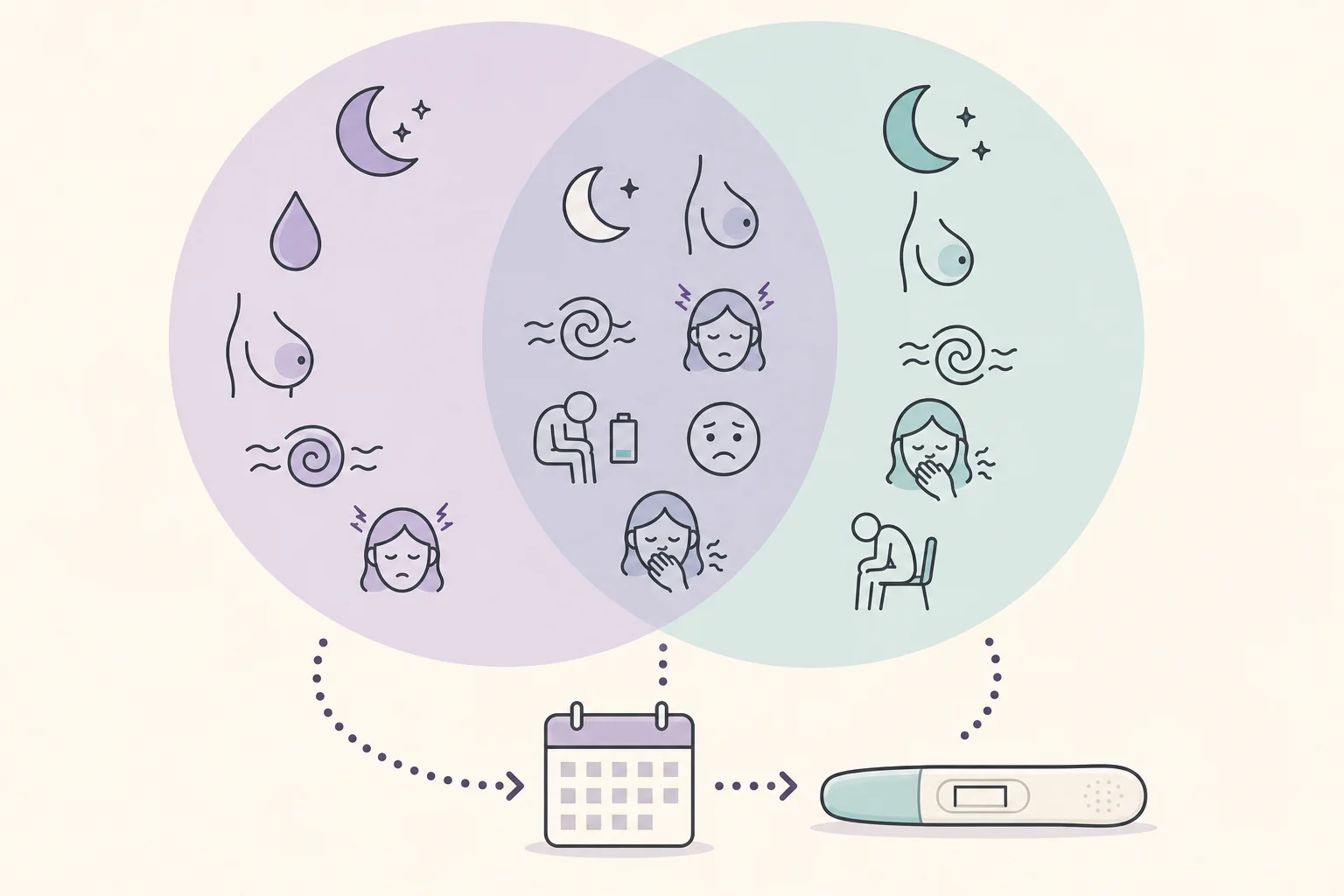
PMS and early pregnancy can both involve changing hormone levels, so the body signals can look alike. Breast tenderness, bloating, cramps, mood changes, fatigue, headache, appetite changes, and mild nausea are not exclusive to pregnancy. This overlap is why online symptom checkers should be used for planning, not diagnosis.
The most helpful distinction is often what happens next: does the period arrive, does a properly timed test become positive, or do symptoms persist or worsen? If symptoms are severe, one-sided, or accompanied by heavy bleeding, fainting, or significant dizziness, do not wait for a symptom comparison to decide whether to seek care.
| Pattern | Can occur with PMS | Can occur in early pregnancy | Safer interpretation |
|---|---|---|---|
| Tender breasts or fatigue | Yes | Yes | Too nonspecific to separate the two |
| Mild cramps or bloating | Yes | Yes | Watch severity and timing; symptoms are not proof |
| Nausea or smell changes | Sometimes | Sometimes | Consider illness and medication as well |
| Late period | Cycle timing can shift | Possible | Use a correctly timed test rather than symptoms alone |
When to take a pregnancy test
A home pregnancy test checks urine for hCG; it does not measure symptoms. Testing on or after the day your period is expected is often more informative than testing immediately after sex. If you know when you ovulated, the expected period is usually a more practical reference point than an uncertain sex date. Always follow the instructions and reading window for your brand.
If you need help choosing a date, use the site’s pregnancy test calculator to estimate an early window, a more reliable day, and a retest point. The calculator is only a planning aid. It cannot account perfectly for late ovulation, irregular cycles, medication, or every medical situation.
- Choose the date reference you trust most. Use the expected period, a tracked ovulation date, or a possible conception date, and label uncertain dates as estimates.
- Follow the test instructions exactly. Check the sample instructions, use the recommended urine sample, and read the result only inside the stated time window.
- Treat an early negative cautiously. If the test was taken before or near the expected period and bleeding has not started, repeat after about 48 hours or follow professional advice.
- Confirm unclear or positive results. A second test or clinical blood hCG test can be appropriate, especially when medication, fertility treatment, pain, bleeding, or an uncertain line is involved.
What if you have symptoms but the test is negative?
A negative result does not always settle the question if the test was early, the urine was diluted, the reading window was missed, or the cycle date was miscalculated. It also may be the correct result: PMS, stress, illness, contraception, and other hormone changes can produce pregnancy-like sensations. Look at the timing and the control line rather than treating symptoms as proof that the test is wrong.
If your period remains absent, repeat the test at the interval recommended by the test instructions or ask a clinician about blood hCG testing. The site’s guide to a negative pregnancy test but no period covers delayed cycles, retesting, and symptoms that should not be dismissed.
- Check validity first. A missing control line, damaged test, expired test, or result read outside the window can make the result invalid rather than negative.
- Retest with a clear plan. Use a fresh test, follow the timing instructions, and avoid repeatedly studying the same dried strip. A new test is more useful than a new interpretation of an old one.
- Escalate when the pattern persists. Repeated negative tests with no period, ongoing concerning symptoms, or uncertainty related to fertility treatment deserve clinician guidance.
When to seek medical care
Early pregnancy symptoms are usually discussed as mild changes, but severe or rapidly worsening symptoms should not be explained away as PMS or early pregnancy. A negative home test also should not delay care for symptoms that could need urgent assessment. If you are worried, contact a local healthcare service and describe the timing, bleeding, pain, test results, and relevant medical history.
Seek urgent help for severe or one-sided pelvic or abdominal pain, heavy bleeding, fainting, marked dizziness, shoulder pain with abdominal symptoms, trouble breathing, or a rapidly worsening condition. These signs do not diagnose a specific problem, but they are important reasons to seek prompt medical evaluation.
- Severe, one-sided, or worsening pain. Do not rely on a symptom checklist to explain significant pelvic or abdominal pain, especially when pregnancy is possible.
- Heavy bleeding or passing large clots. Bleeding that is heavy, persistent, or accompanied by pain needs professional advice rather than online comparison.
- Fainting, severe dizziness, or unusual weakness. These symptoms can have many causes and may require urgent assessment even if a home test is negative.
- A positive test with concerning symptoms. Contact a healthcare professional promptly and follow local emergency guidance if symptoms are severe.
FAQ about early pregnancy symptoms
Medical references
For background on home pregnancy tests and timing, see FDA home-use pregnancy test guidance, Office on Women’s Health pregnancy-test information, MedlinePlus pregnancy test information. These sources explain why timing, urine concentration, instructions, and follow-up matter.
Bottom line
Early pregnancy symptoms can be useful clues, but they overlap with PMS and many other causes. Track dates, test at a sensible time, repeat an early negative when appropriate, and seek medical care for severe, one-sided, heavy, fainting, or worsening symptoms.