Do Pregnancy Tests Expire? 7 Checks First
Home pregnancy tests have expiration dates for a reason. This guide explains what can change after a test expires, how to decide whether a result is reliable, and when a fresh test or clinical confirmation is safer.
Quick answer: yes, pregnancy tests expire. After the printed expiration date, the chemical strip may not react to hCG as reliably, especially if the test was stored in heat, humidity, or damaged packaging. An expired test is not the best tool for an important decision; use a fresh test and follow the read-time instructions.
An expired pregnancy test is most likely to create a confusing or falsely negative result, not a dependable shortcut. If your period is late, symptoms continue, or the result affects medication, fertility treatment, or medical timing, repeat with a new test or ask a healthcare professional about blood hCG testing.
Contents
Do Pregnancy Tests Expire?
Most home pregnancy tests include an expiration date on the box or foil wrapper. The date is the manufacturer’s quality window for the test strip, control chemistry, absorbent pad, and packaging. Before that date, the brand expects the test to work when it is stored and used according to instructions. After that date, the result may still show a line, but the company is no longer promising the same performance.
The key point is not that an expired test automatically becomes useless the next morning. The issue is uncertainty. A test that sat in a bathroom cabinet for years, a car, a damp drawer, or a torn wrapper may have degraded before or after the printed date. When the answer matters, a fresh test is cheaper than guessing.
| Situation | Reliability | Best next step |
|---|---|---|
| Unexpired test, sealed wrapper, correct timing | Best home-test scenario, especially after a missed period. | Read only inside the stated time window. |
| Recently expired but sealed | May react, but accuracy is not guaranteed. | Repeat with a new test before making decisions. |
| Expired plus heat, humidity, or damaged wrapper | Higher risk of false negative, blank, or confusing lines. | Discard it and use a fresh test. |
| Negative expired test but period is late | Do not rely on it to rule out pregnancy. | Retest with a new test or ask about blood hCG. |
Why an Expired Pregnancy Test Can Be Wrong
Home pregnancy tests detect hCG in urine. The test strip contains reagents that need to stay stable enough to produce a readable control line and, when hCG is present, a test line or digital result. Over time, those materials can lose sensitivity. Storage conditions matter because moisture and heat can accelerate breakdown.
An expired test can still look normal from the outside. The wrapper may be intact and the plastic may look clean, but the chemistry inside is what matters. That is why the printed date and the instructions matter more than whether the device “looks fine.”
False negatives are the bigger concern
If the strip has lost sensitivity, it may fail to detect low or moderate hCG. That can be especially misleading if you are testing early, using diluted urine, or checking before a missed period.
False positives are less likely but confusion is possible
Expired tests are not a reliable way to create a true positive. More often, people see evaporation lines, indent marks, weak control lines, or digital errors and are unsure how to interpret them.
Digital tests still have expiration dates
A digital screen can feel more definite, but the device still depends on a chemical strip inside. Batteries, sensors, and strip chemistry can all become less dependable after the date or after poor storage.
What To Do If You Already Used an Expired Pregnancy Test
Do not panic and do not treat one expired-test result as final. Use the result as a prompt to check timing and repeat correctly.
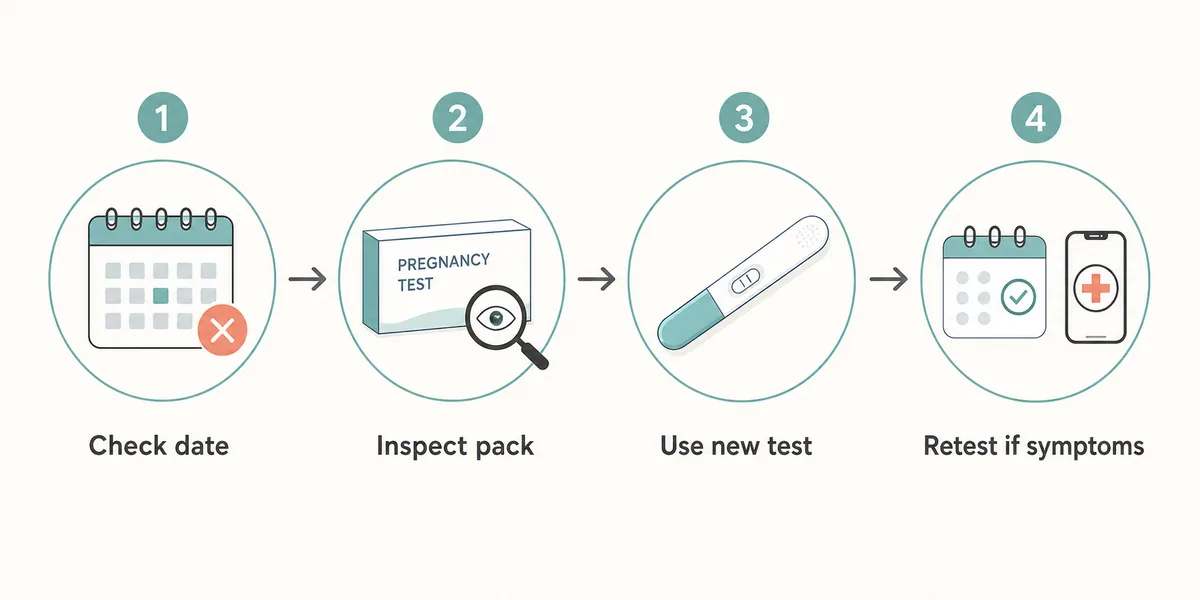
- Find the expiration date. Check the box and each individual wrapper. If the wrapper date differs from the outer box, rely on the wrapper for that test.
- Check the wrapper before opening. Do not use a test if the foil is torn, swollen, wet, or already open. Moisture exposure can ruin the strip.
- Repeat with a new test. Use first morning urine if testing early, and read the result only during the brand’s stated window.
- Retest in 48 hours if the answer is still unclear. hCG often rises over time in early pregnancy, so a fresh test two days later can be clearer than repeating immediately.
- Confirm clinically when the stakes are high. If you have pain, bleeding, fertility-treatment timing, or conflicting results, ask a clinician about urine or blood hCG testing.
Practical rule
If the test is expired, damaged, or stored poorly, do not use it to rule out pregnancy. Replace the test and interpret the new result in context.
How To Store Pregnancy Tests So They Stay Reliable
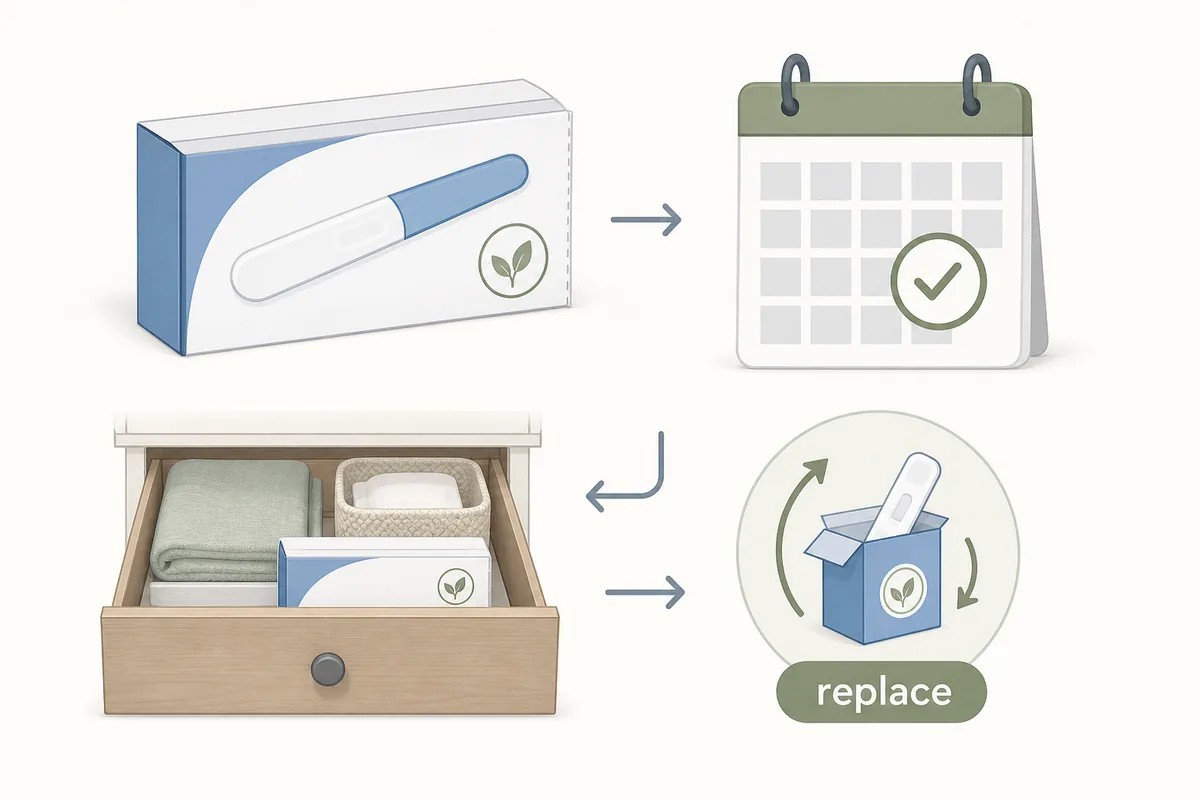
Storage is part of accuracy. Keep tests sealed, dry, and within the temperature range on the package. A bathroom can be convenient, but steam and humidity are not ideal for long-term storage. A bedroom drawer or cabinet away from heat is usually better.
| Check | Why it matters |
|---|---|
| Keep the wrapper sealed until use | The foil protects the strip from humidity and contamination. |
| Avoid bathrooms, cars, and sunny windows | Heat and moisture can weaken the chemicals before the printed date. |
| Do not mix loose tests without wrappers | You may lose the lot, brand, instructions, and expiration information. |
| Use a new test for a medical decision | The cost of a fresh test is small compared with the risk of relying on a degraded one. |
Expired Test vs Invalid, Faint, or Negative Results
Expiration is only one reason a pregnancy test can be hard to trust. A missing control line means the test is invalid. A faint colored line inside the reading window may be an early positive. A line that appears after drying may be an evaporation line. A negative result can be wrong if testing happens too early or urine is diluted.
If you used an expired test and the result was negative, treat it as unconfirmed. If it was positive, repeat with a fresh test instead of assuming the expired device was either definitely right or definitely wrong.
For more context, compare this guide with the invalid pregnancy test guide, the faint line vs evaporation line guide, the negative test but no period guide depending on what you saw.
Can an AI Pregnancy Test Checker Read an Expired Test?
Our AI pregnancy test checker can review whether a photo shows a control line, a visible test line, glare, blur, or evaporation-line patterns. It cannot verify the chemical stability of an expired strip or measure hCG.
If you are mainly unsure when to test, use the pregnancy test calculator to choose a better retest day, then use a fresh unexpired test.
FAQ About Expired Pregnancy Tests
Sources and Medical Context
For general home-test timing and confirmation context, review the Office on Women's Health pregnancy test guidance, Mayo Clinic's home pregnancy test advice, MedlinePlus pregnancy test information.
Summary
Pregnancy tests do expire. A recently expired test may still react, but it is not dependable enough for ruling out pregnancy or making health decisions. Check the date and wrapper, consider storage conditions, repeat with a fresh test, and seek clinical confirmation when symptoms or circumstances make the answer important.