Invalid Pregnancy Test: 7 Reasons It Happens and What To Do Next
A missing control line, blank window, smeared result, or confusing error symbol usually means the test cannot be interpreted. This guide explains the most common causes and the safest next step.
Quick answer: an invalid pregnancy test means you should not count the result as positive or negative. Use a new test, follow the package timing exactly, and consider a healthcare professional or blood hCG test if the answer affects symptoms, medication, fertility treatment, or urgent decisions.
This article focuses on invalid pregnancy test results such as no control line, no visible window result, error messages, too much or too little urine, expired tests, and results read outside the stated time window.
What Does an Invalid Pregnancy Test Mean?
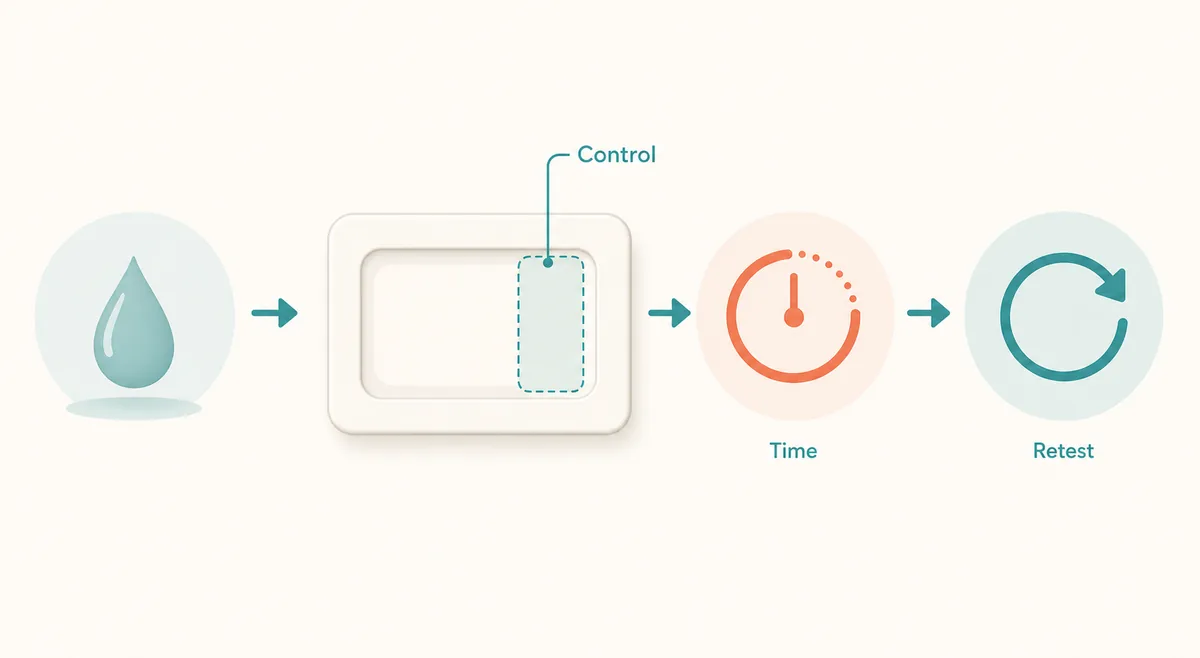
An invalid result means the test did not complete its built-in check correctly, or the result window cannot be trusted. The most common sign is no control line. On some digital tests, it may be an error symbol, blank display, or message telling you to test again.
Do not treat an invalid test as negative just because you do not see a positive line. Also do not treat it as positive because a smudge, shadow, or partial line appeared. The reliable action is to repeat with a new test and follow the instructions from the specific brand.
| What you see | Likely meaning | Best next step |
|---|---|---|
| No control line | The test did not validate properly, even if another mark appears. | Use a new test and read it within the stated window. |
| Blank result window | The sample may not have moved through the strip, or the device failed. | Check the instructions, then retest with a new kit. |
| Smeared dye or half line | The strip may be flooded, damaged, or read too late. | Do not interpret it; repeat with correct sample amount. |
| Digital error symbol | The device cannot provide a valid reading. | Follow the brand error instructions and retest. |
7 Reasons a Pregnancy Test Can Be Invalid
Invalid results usually come from the test process rather than from pregnancy status itself. These are the common causes to check before you retest.
1. The control line did not appear
The control line shows that urine moved through the test correctly and the test chemicals worked. If it is missing, the result is invalid, even if you think you see a second mark.
2. Too much urine flooded the strip
Too much urine on a pregnancy test can sometimes flood the absorbent strip or blur the dye. This does not reliably make the test positive or negative; it makes the result harder to trust.
3. Too little urine reached the test strip
If the test is not dipped long enough or not enough urine reaches the absorbent tip, the sample may not travel far enough to produce a valid control line.
4. The test was expired, damaged, or stored poorly
Heat, moisture, a torn wrapper, or an expired kit can affect the test chemistry. Use a sealed test within its expiration date and store it as the package recommends.
5. The result was read too early or too late
Reading before the control line develops can look blank. Reading after the valid window can create drying marks, shadows, or smears that are not reliable results.
6. Instructions for a specific brand were missed
Some tests require dipping in a cup; others allow midstream use. Digital tests may need to stay flat or show an hourglass while processing. Small instruction differences can change reliability.
7. The sample was unusually diluted
Very diluted urine is more likely to cause a false negative than an invalid test, but it can still make early results harder to read. First morning urine is often more useful when testing early.
Do not rescue a failed test
Once a test is invalid, photographing it, enhancing contrast, or waiting longer cannot turn it into a trustworthy result. Start again with a fresh test.
What To Do After an Invalid Pregnancy Test
Use this short sequence before you retest. It keeps the decision practical and avoids overreading a failed strip.
- Check the control area first. If the control line is missing, stop interpreting the test.
- Confirm the time window. Use the read time printed on that exact test brand, not a general rule from another kit.
- Retest with a new device. Use a sealed, in-date test. If testing early, first morning urine may help.
- Wait 48 hours if the timing is early. If your period is not due yet or just late, waiting can give hCG more time to rise.
- Seek medical confirmation when the answer matters. Ask about a blood hCG test or clinical advice if you have pain, heavy bleeding, fertility-treatment context, medication decisions, or repeated confusing results.
For general background on home testing and follow-up, see Mayo Clinic guidance on home pregnancy tests, Cleveland Clinic pregnancy test information and the Office on Women's Health pregnancy test overview.
How To Avoid Invalid or Hard-To-Read Results Next Time
Most invalid results can be avoided by slowing down before you open the wrapper. Check the expiration date, read the brand instructions, set a timer, and keep the result window flat while the test develops.
If your main issue is a faint line rather than a missing control line, use a different decision path. Faint colored lines, evaporation lines, and dried-test marks need different checks than a truly invalid result.
| Before testing | Why it matters |
|---|---|
| Use an in-date, sealed test | Damaged or expired chemistry can fail. |
| Choose the correct sample method | Midstream and dip tests need different timing. |
| Use the exact urine amount | Flooding or under-sampling can make the strip fail. |
| Set a timer | Early and late reading both create confusion. |
| Take a clear photo only after a valid result appears | Photo tools help with visible results, not failed controls. |
Can an AI Pregnancy Test Reader Help With an Invalid Test?
Our AI pregnancy test checker can help review a clear photo when the control line and result area are visible, especially for faint lines or possible evaporation lines. It cannot make a missing control line valid.
If your problem is timing, start with the when to take a pregnancy test guide or compare uncertain lines with the faint line vs evaporation line guide. If your period is late and tests stay negative or invalid, the missed-period guide explains when to retest and when to ask for help. negative test but no period guide.
FAQ About Invalid Pregnancy Tests
Summary
An invalid pregnancy test is a failed or unreliable test, not a negative result. The safest approach is to stop interpreting it, retest with a fresh in-date kit, follow the exact time and sample instructions, and seek clinical confirmation when symptoms, medication, fertility treatment, or urgent decisions are involved.