Pregnancy Test After Miscarriage: When to Retest
Why a test can stay positive for a while, how to interpret a fading or persistent line, and when symptoms should be checked by a clinician.
Quick answer: A pregnancy test can remain positive after a miscarriage because human chorionic gonadotropin, or hCG, does not disappear immediately. The time it takes to become negative varies with the pregnancy, how far along it was, the treatment received, and the starting hCG level. A single home test cannot show whether hCG is falling normally, whether pregnancy tissue remains, or whether a new pregnancy has started.
This guide explains pregnancy test after miscarriage in practical terms: what a positive or faint line may mean, how to plan a repeat test, which symptoms are urgent, and why follow-up instructions from your healthcare team take priority over an online result checker.
On this page
Why Can a Pregnancy Test Stay Positive After a Miscarriage?
Home pregnancy tests detect hCG in urine. During a pregnancy, hCG is produced by pregnancy-related tissue. After a miscarriage, the source of hCG may be gone or changing, but the hormone already in the body needs time to be cleared. That is why a positive test soon after a loss does not automatically mean that the miscarriage did not happen or that a new pregnancy has begun.
- Lingering hCG: Hormone levels can take time to fall after the pregnancy ends.
- A new pregnancy: If ovulation has returned and there was unprotected sex, a new pregnancy is possible, but a urine test alone cannot separate it from remaining hCG.
- Retained tissue or another problem: Persistent hCG, pain, fever, or heavy bleeding needs professional assessment rather than repeated home interpretation.
If you are unsure how to distinguish a valid line from a drying mark, read our faint line versus evaporation line guide before interpreting a photograph.
How Should You Think About the Pregnancy Test Timeline?
The useful question is not simply how many days after a miscarriage a test should be negative. The more important questions are how the loss was confirmed, what follow-up was advised, whether hCG was measured, and whether you have symptoms. Use the table as a framework for a conversation with a healthcare professional, not as a personal diagnosis.
| Situation | What a home test may show | Safer next step |
|---|---|---|
| Soon after bleeding or treatment | Positive, faint, or changing results can reflect hCG that is still clearing. | Follow the written plan from your clinician and ask when to retest. |
A home test is a yes-or-no screening tool, not a hormone monitor. Different brands detect different concentrations, and the same brand can look different when urine is diluted or concentrated. Testing several times in one day often creates more confusion because the result can change with fluid intake without the underlying situation changing.
When Should You Retest After a Miscarriage?
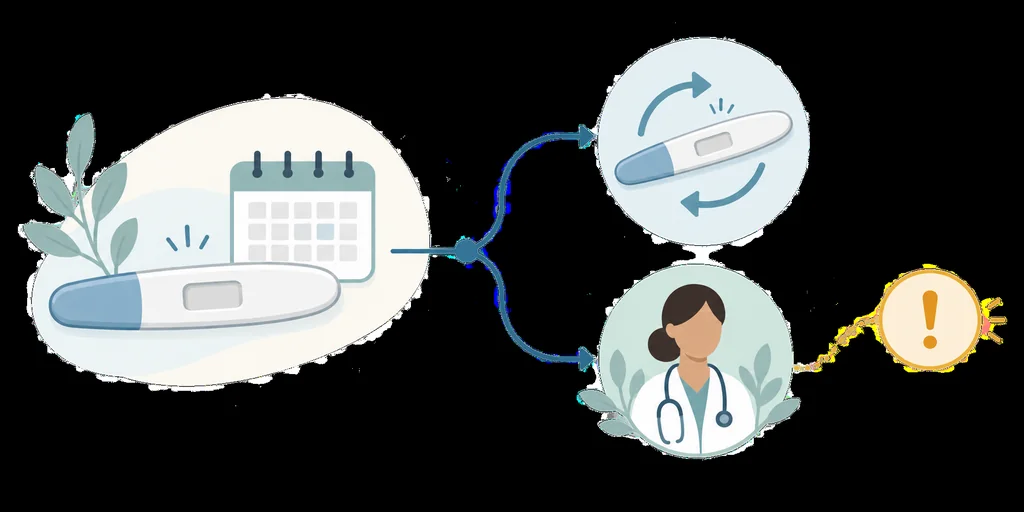
There is no universal retesting schedule because care depends on whether the miscarriage happened naturally, was treated with medication, or required a procedure, and on what your clinician saw. Some services arrange a home urine test after a few weeks; others use serial blood hCG or an ultrasound. The correct interval is the one in your discharge instructions or follow-up plan.
- 1. Find the follow-up instruction. Check your discharge paperwork, patient portal, prescription information, or message from the care team.
- 2. Use one clear test at the requested time. Check the expiry date, use the sample as directed, and read it only during the stated window.
- 3. Record the result without over-reading the shade. Write down the date, brand, result, and symptoms; line darkness is not a quantitative hCG result.
| What to record | Why it helps |
|---|---|
| Date and approximate time | It lets the clinician interpret the result in relation to treatment and the planned interval. |
| Test brand and expiry date | Detection thresholds and reliability can differ between products. |
What Can Positive, Faint, and Negative Results Mean?
A positive result after miscarriage is not automatically a sign of a new pregnancy or a failed recovery. It usually means that hCG is still detectable, but the strip cannot identify where the hormone is coming from or whether the level is rising or falling. A faint line has the same limitation. A line that is visible within the reading window should be documented and discussed according to your follow-up plan.
A negative home result means the urine sample was below that test's detection threshold. It may be consistent with hCG having fallen, but it does not by itself confirm that all pregnancy tissue has passed or that a complication is impossible. A negative result also does not rule out a new pregnancy if ovulation has returned and the timing is early.
| Result | What it can tell you | What it cannot tell you |
|---|---|---|
| Positive within the reading window | hCG is detectable in that urine sample. | It cannot distinguish lingering hCG, new pregnancy, or a problem that needs assessment. |
| Faint positive | A small amount of detectable hCG may be present, or the line may be difficult to read. | It cannot measure the hCG level or prove that the line is getting lighter or darker biologically. |
| Negative | The sample was below the test's threshold. | It cannot replace a planned blood test, ultrasound, or symptom assessment. |
Which Symptoms Need Medical Care?
After a miscarriage, bleeding and cramping can occur, but symptoms that are severe, worsening, prolonged, or accompanied by illness should be assessed. Do not wait for a home test to become negative if you feel unsafe. A urine result is not an emergency triage tool and cannot rule out an ectopic pregnancy or infection.
- Get urgent help for severe or one-sided abdominal or pelvic pain. Pain that is intense, worsening, or focused on one side needs prompt assessment.
- Get urgent help for fainting, severe dizziness, or shoulder pain. These symptoms can signal internal bleeding or another emergency and should not be judged by a home test.
- Seek prompt advice for very heavy bleeding, fever, chills, or foul-smelling discharge. These can be warning signs of a complication or infection.
If you are comparing a test result with symptoms, our false positive pregnancy test guide can explain common sources of confusion, but urgent symptoms still need medical care.
What About Ovulation, a New Pregnancy, and Trying Again?
Ovulation can return before the next period, but the timing varies. That means pregnancy may be possible before the first post-miscarriage period if you have unprotected sex. At the same time, a positive test soon after the loss may still be caused by earlier hCG. This is why the date of intercourse, the pattern of test results, and any quantitative hCG or ultrasound findings matter together.
If you want to try for another pregnancy, ask your clinician when it is medically appropriate for your situation. The answer may depend on bleeding, infection risk, treatment, anemia, ectopic-pregnancy evaluation, medications, and emotional readiness. Use contraception if you do not want another pregnancy before you have a plan.
- Keep the dates: Record the loss or treatment date, test dates, intercourse dates if relevant, and appointment dates.
- Ask about contraception or trying again: Your clinician can give advice that fits your treatment, recovery, and goals.
- Use online tools for organization only: They may support questions for an appointment but cannot diagnose or confirm hCG trends.
Can a Photo Checker Confirm a Pregnancy Test After Miscarriage?
A photo checker may help you describe whether a visible line appears in a clear image, but it cannot tell whether the hCG is leftover from the earlier pregnancy, rising from a new pregnancy, or associated with a complication. It also cannot replace a planned quantitative blood test, ultrasound, or examination.
You can use the AI pregnancy test checker to review whether a line is visible, but the result is not a diagnosis or a measurement of hCG.
For background on test timing and reliability, read the pregnancy test accuracy guide .
FAQ About Pregnancy Tests After Miscarriage
Trusted Medical References
For general background and safety information, review these first-party medical resources. They do not replace individualized advice from the team caring for you.
Summary
A pregnancy test after miscarriage can stay positive because hCG may take time to clear. A positive or faint line does not by itself prove a new pregnancy, retained tissue, or a failed recovery, and a negative urine test does not replace a planned clinical check. Follow your clinician's retesting instructions, record dates and symptoms, and seek urgent care for severe pain, fainting, shoulder pain, very heavy bleeding, fever, or feeling seriously unwell.