Implantation Bleeding vs Period: 7 Differences and When to Test
A practical, non-diagnostic guide to timing, flow, color, cramps, testing and signs that need medical attention.
Quick answer: Implantation bleeding is usually described as light spotting that stays light and ends within a short time, while a period more often becomes a steady or heavier flow and lasts several days. However, color or timing alone cannot confirm pregnancy.
If you are comparing implantation bleeding vs period symptoms, look at the whole pattern: when the bleeding started, whether it is increasing, how much protection you need, how long it lasts, and whether pain or dizziness is present. The only practical way to check pregnancy at home is an hCG pregnancy test taken at an appropriate time.
On this page
Implantation Bleeding vs Period: Quick Comparison
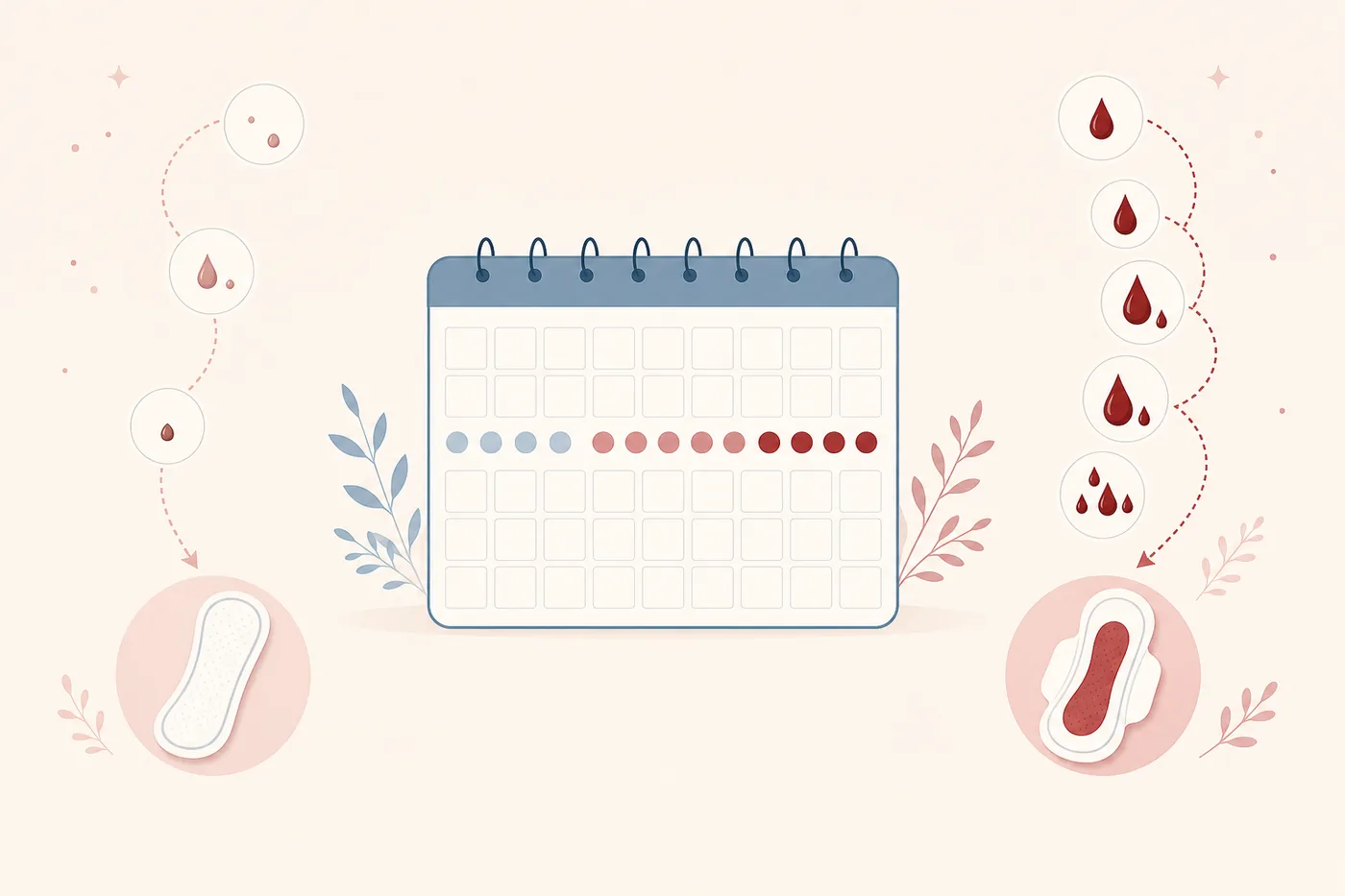
The most useful distinction is the trend. Light spotting that never develops into a normal flow may fit descriptions of implantation bleeding, but it may also have many other causes. Menstrual bleeding commonly starts light, becomes more consistent or heavier, and then tapers.
No single row in this table is proof. Cycle variation, hormonal contraception, recent sex, a cervical exam, infection and early pregnancy complications can all change the pattern. Use the comparison to decide when to test or contact a clinician, not to make a diagnosis.
| Feature | Possible implantation spotting | Typical period pattern |
|---|---|---|
| Flow | A few spots or very light flow that does not build | Often becomes steady or heavier before tapering |
| Color | Pink, light red or brown may occur | Red, dark red or brown can all occur |
| Duration | Often brief, from several hours to about one or two days | Commonly several days, based on your usual cycle |
| Timing | May appear near the expected period after ovulation | Usually begins around the expected menstrual date |
| Cramps | None or mild discomfort may occur | May match your usual menstrual cramps |
| Clots | Not usually expected with very light spotting | Small clots can occur during a normal period |
| Next step | Test at the right time and monitor the pattern | If the period is unusual or pregnancy is possible, test and reassess |
What Is Implantation Bleeding?
Implantation bleeding is a name used for light spotting that may occur when an early pregnancy attaches to the uterine lining. Medical sources describe it as a small amount of light bleeding, but not everyone experiences it and many pregnant people never notice spotting at all.
It is also difficult to verify after the fact. A person may have light bleeding before a positive pregnancy test, yet the bleeding itself does not prove that implantation caused it. This is why clinicians focus on pregnancy testing, symptom progression and, when needed, an examination or laboratory testing rather than appearance alone.
The phrase pregnancy spotting vs period is useful for describing the question, but spotting is a symptom rather than a diagnosis. Keeping track of the start date, amount, pain and changes over time gives you more useful information than repeatedly checking color.
- Usually light: It should not require the same pad or tampon changes as a normal or heavy period.
- Usually short: It is commonly described as brief and not steadily increasing.
- Not a pregnancy test: A urine or blood hCG test is needed to check for pregnancy.
7 Differences Between Implantation Bleeding and a Period
First, compare the amount. Implantation spotting is generally described as a few marks on toilet paper or underwear, whereas menstrual flow is more likely to require ongoing menstrual protection. Second, compare the direction of change: spotting tends to remain light, while a period often becomes more established during the first day or two.
Third, consider duration. Brief spotting is more compatible with common implantation descriptions than bleeding that follows your usual multi-day period. Fourth, consider timing, but allow for irregular cycles. Ovulation can move from month to month, so an assumed implantation date may be wrong even when an app predicts it precisely.
Fifth, compare cramps with your normal pattern. Mild twinges are nonspecific; severe, worsening or one-sided pain is not something to label as implantation. Sixth, clots and tissue are less consistent with very light spotting. Seventh, compare the full pattern with your personal baseline. An unusually light period can still be a period, while heavier bleeding in early pregnancy needs medical guidance.
- Amount: Spotting is lighter than a usual menstrual flow.
- Progression: A period often builds; implantation-type spotting should not become heavy.
- Duration: A normal period usually lasts longer than a brief spotting episode.
- Pain: Severe or localized pain needs assessment rather than online comparison.
When Does Implantation Bleeding Occur?
Implantation-related spotting is often described around 10 to 14 days after ovulation, which can place it close to the date a period is expected. That overlap is the main reason the two are easy to confuse. The estimate is not a countdown that can confirm what is happening, because most people do not know the exact day of ovulation without clinical monitoring.
If your cycles are irregular, app dates are even less reliable. Stress, illness, travel, breastfeeding, coming off hormonal contraception and conditions that affect ovulation can shift a period. Record the actual bleeding pattern and use a testing date based on the expected period or time since sex rather than assuming one symptom marks implantation.

How Long After Implantation Bleeding Can I Test?
For the clearest home result, test on or after the day your period is expected and follow the brand instructions exactly. Testing very early can produce a negative result because urine hCG has not risen enough for that test, even if pregnancy has begun. First-morning urine may be useful when testing early because it is often more concentrated.
If the result is negative but your period does not start, repeat the test after a few days or follow a clinician's advice. If you do not know when your period is due, use the time since sex and our pregnancy test calculator as a planning aid. A positive test with bleeding should be discussed with a healthcare professional, especially if the bleeding increases or pain develops.
A photo reader can help you inspect whether a control line and a possible test line are visible, but it cannot measure hCG, confirm viability, explain vaginal bleeding or rule out an ectopic pregnancy. Always read the test within the manufacturer's time window.
Other Causes of Spotting Before or Instead of a Period
Light bleeding has many possible explanations. Hormonal contraception, ovulation-related spotting, recent sex, cervical irritation, an examination, infection and cycle changes can all cause bleeding that looks similar. In early pregnancy, bleeding can also occur for reasons that require medical assessment, so appearance should never be used to rule out a problem.
If spotting repeats across cycles, occurs after sex, has an unusual odor, comes with fever or pelvic pain, or is a new pattern for you, arrange medical advice. If a pregnancy test is negative and the period remains absent, the next step may be repeat testing and evaluation for delayed ovulation or other causes of missed periods rather than assuming implantation.
| Situation | Practical next step |
|---|---|
| One brief episode, no severe symptoms | Track the amount and timing; test when appropriate |
| Negative test and no period | Repeat after a few days and review test timing |
| Positive test with bleeding | Contact a pregnancy care professional for advice |
| Recurring or unexplained spotting | Arrange a non-urgent clinical review |
When to Contact a Clinician or Seek Urgent Care
Contact a clinician if bleeding continues, becomes more than light spotting, repeatedly returns, or occurs with a positive pregnancy test. Medical advice is also appropriate when you are unsure how much bleeding is normal for you, when a period is substantially different from usual, or when pain is persistent.
Seek urgent care for heavy bleeding, severe abdominal or pelvic pain, pain focused on one side, shoulder pain, fainting, marked dizziness, weakness, fever or feeling acutely unwell. These symptoms cannot be safely sorted by an online comparison. If you may be pregnant, tell the healthcare team about the test date, bleeding amount, pain location and any previous ectopic pregnancy or pregnancy complications.
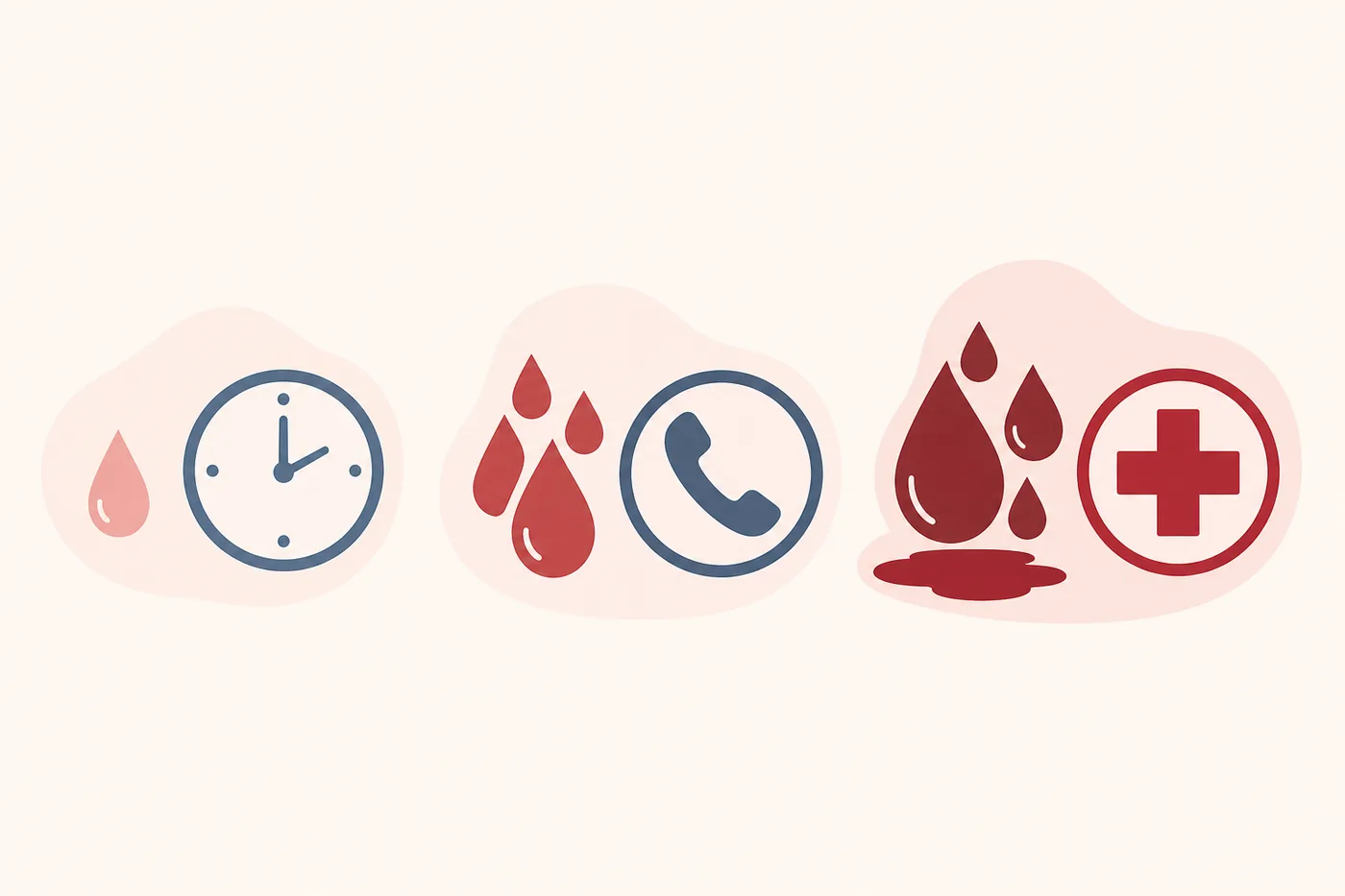
- Monitor: A small, brief episode without significant pain, while planning an appropriately timed test.
- Call: Bleeding that persists, increases, recurs or accompanies a positive pregnancy test.
- Urgent care: Heavy bleeding, severe or one-sided pain, shoulder pain, fainting or major dizziness.
Frequently Asked Questions
Medical Sources
This guide uses cautious symptom and testing information from:
Bottom Line
In an implantation bleeding vs period comparison, a light, brief pattern that does not build may look different from a usual menstrual flow, but it cannot confirm pregnancy. Track the pattern, test at the right time, repeat a negative test when appropriate, and seek medical help for heavy bleeding, significant pain, dizziness or any rapidly worsening symptom.